
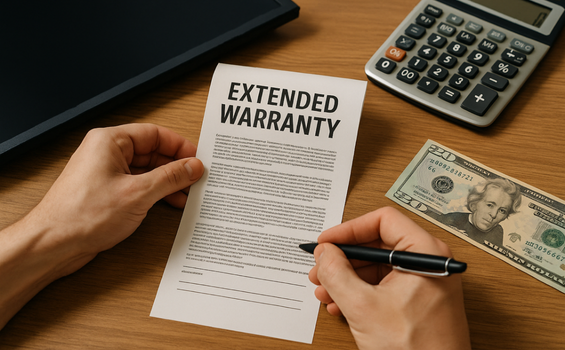
Consumer data shows that only 12-20% of extended warranty c ever file claims, while retailers earn profit margins of 50-80% on these service contracts—yet certain products and circumstances make extended coverage financially sensible despite overall industry statistics favoring sellers
Understanding Extended Warranty Economics
When evaluating whether are extended warranties worth it, start with fundamental economics. Extended warranties, also called service contracts, represent insurance against product failure. Like all insurance, the premiums collected exceed average claim payouts, otherwise sellers couldn’t profit from offering these products.
Retailers and manufacturers aggressively promote warranty plans because they generate substantial profit margins with minimal risk. Sales staff often receive commissions for warranty sales, creating incentives to emphasize unlikely failure scenarios and downplay the cost of the warranty relative to potential repair expenses.
However, individual situations differ from aggregate statistics. While most consumers who purchase an extended warranty never file claims, those facing major repairs benefit significantly. The question becomes identifying which circumstances justify coverage and which represent poor value propositions.
Products Where Extended Warranties Rarely Make Sense
Certain product categories consistently prove poor candidates for extended warranty purchases based on reliability data and repair cost analysis.
Small Electronics and Appliances
Items under $200 rarely justify extended coverage. If the product fails after the factory warranty expires, replacement often costs less than the cost of the warranty plus potential deductibles or service fees.
Coffee makers, toasters, basic televisions under 40 inches, and similar small appliances show low failure rates during extended warranty periods. When failures occur, replacement typically provides better value than repairs out of pocket even without warranty coverage.
Products with Strong Manufacturer Warranties
Some manufacturers offer extensive factory warranty coverage that overlaps significantly with extended warranty timeframes. Purchasing additional coverage duplicates existing protection during overlap periods.
Many electronics manufacturers provide one-year comprehensive warranties covering defects and failures. Extended warranties extending coverage to two years provide only one additional year of protection, yet pricing often suggests coverage for the full two-year period.
Items You Replace Frequently
Consider how long you plan to keep products before upgrading. Extended warranties typically begin after factory warranty expires and run for 1-3 additional years. If you upgrade technology regularly, coverage expires before your actual ownership period ends.
Smartphones typically get replaced every 2-3 years as consumers upgrade to new models. Extended warranties covering years 2-5 provide little value when you plan to replace devices well before the warranty expires.
Situations Where Extended Coverage Makes Financial Sense
Despite general statistics favoring sellers, specific circumstances make extended warranties financially prudent.
High-Value Electronics with Expensive Repair Costs
Premium televisions over 55 inches, high-end computers, and professional-grade audio equipment often have repair costs approaching 40-60% of replacement values. Extended warranty cover for these items provides meaningful financial protection against unexpected repairs.
A $2,000 television might have a $300 extended warranty covering mechanical breakdown and component failures. A single main board replacement costing $800-1,200 justifies the warranty investment, and failure rates for complex electronics increase significantly after year three.
Items with Known Reliability Concerns
Research reliability ratings before making warranty decisions. Consumer Reports, J.D. Power, and industry-specific publications track failure rates across brands and models. Products with documented reliability issues in years 2-4 become better warranty candidates.
Certain refrigerator models, for example, show higher compressor failure rates around year 3-4. When purchasing models with known issues, extended warranties offer protection against predictable risks.
Products You Cannot Afford to Replace
If an unexpected product failure would create financial hardship, extended warranties provide peace of mind and budget predictability. Service contracts convert uncertain large expenses into known smaller costs through monthly or upfront warranty payments.
This calculation depends on your financial situation rather than mathematical expected value. A $400 washing machine warranty might not make statistical sense, but if a $1,200 replacement would strain your budget significantly, the warranty provides valuable financial planning stability.
Commercial or Heavy-Use Items
Products used more intensively than typical consumer applications experience higher failure rates. If you work from home using computers 10-12 hours daily, or run commercial-grade appliances constantly, higher usage justifies extended coverage for major repairs more than average consumer use patterns suggest.
The Consumer Protection Agency documents consumer experiences with warranty claims and identifies patterns in warranty value across product categories.
Evaluating Warranty Coverage Details
Not all warranty plans offer comparable protection. Critical evaluation of service contracts before purchase prevents buying coverage that won’t actually pay for repairs you might need.
Coverage Limitations and Exclusions
Read warranty terms carefully to understand what the warranty cover actually includes. Many warranties exclude:
- Normal wear and tear on moving parts
- Cosmetic damage like scratches or dents
- Damage from improper use or maintenance failures
- Environmental damage from heat, moisture, or power surges
- Specific components or types of failures
Service contracts covering only “mechanical breakdown” might exclude electronic component failures that represent the most common issue with modern appliances. Bumper to bumper coverage provides more comprehensive protection than limited powertrain or specific component warranties.
Deductibles and Service Fees
Some warranties include per-claim deductibles of $50-150, reducing actual coverage value. A $300 warranty with $75 deductibles for each service call might cover only $150 of a $300 repair after you pay the deductible twice during the coverage period.
Service call fees, diagnostic charges, and shipping costs may apply even when warranties cover repair parts. Calculate total out-of-pocket costs under warranty scenarios rather than assuming full coverage.
Repair vs. Replacement Terms
Understand whether warranties offer repairs or replacements when products fail. Some contracts provide replacement with refurbished units of equivalent value rather than repairing original items.
Replacement terms might specify current market value rather than original purchase price. A three-year-old laptop replaced under warranty might receive a $500 current-value replacement rather than a $1,200 equivalent-to-original-purchase model.
Claim Process Requirements
Complex claim procedures reduce effective warranty value. Service contracts requiring:
- Prior authorization before repairs
- Specific authorized service centers often distant from your location
- Extensive documentation of maintenance and proper use
- Multiple contact attempts or claim submissions
These requirements create friction that may prevent successful claims even when coverage technically applies.
Manufacturer vs. Third-Party Extended Warranties
Warranties offer through manufacturers, retailers, or third-party companies provide different value propositions and reliability levels.
Manufacturer Extended Warranties
Manufacturer-backed coverage typically provides most reliable claims processing and broadest service network access. These warranties extend factory warranty coverage seamlessly with familiar terms and conditions.
However, manufacturer warranties often cost more than third-party alternatives because they provide more comprehensive coverage and better service experiences. The higher cost may justify the reduced claim hassle.
Retailer Service Contracts
Major retailers like Best Buy, Walmart, and Home Depot sell warranty plans backed by third-party administrators. These contracts provide convenience since you can address issues at purchase locations, but coverage terms vary significantly by retailer.
Some retailer warranties include benefits like free product replacement rather than repairs, simplified claim processes through retail locations, and more generous replacement terms than manufacturer programs.
Third-Party Warranty Companies
Independent warranty companies often offer the lowest prices but may provide inferior claims experiences. Research company financial stability and customer service ratings before purchasing third-party coverage.
Some third-party warranty providers have gone bankrupt, leaving consumers with worthless contracts. Check Better Business Bureau ratings and state insurance department complaint records for warranty companies before purchasing coverage.
Alternative Protection Strategies
Instead of deciding whether to buy an extended warranty, consider alternatives that provide similar financial protection.
Credit Card Extended Warranty Benefits
Many credit cards automatically extend manufacturer warranties by an additional year when you purchase products using the card. This free benefit often provides equivalent protection to paid extended warranties without additional cost.
Visa, Mastercard, and American Express premium cards commonly include this benefit. Review your credit card benefits guides to understand coverage terms and claim procedures.
Dedicated Emergency Savings
Setting aside the cost of the warranty in an emergency fund provides flexible financial protection without coverage limitations or claim procedures. If products don’t fail, you retain the saved funds for other purposes.
For consumers purchasing multiple extended warranties annually, redirecting these costs into savings accounts often provides better financial outcomes over time given low warranty claim rates.
Choosing More Reliable Products
Researching reliability ratings and purchasing products with strong track records reduces failure likelihood, potentially eliminating need for extended coverage.
An additional $100-200 for a more reliable appliance model often provides better value than purchasing extended warranties on less reliable alternatives. Reliability ratings from Consumer Reports and similar organizations identify products requiring minimal repairs during typical ownership periods.
Calculating Extended Warranty Break-Even Points
Determine the mathematical threshold where warranties become worthwhile through break-even analysis.
Divide the cost of the warranty by the average repair cost for your product type. If extended warranties cost $300 and typical covered repairs average $800, you need a 37.5% probability of requiring repairs during the coverage period for the warranty to break even financially.
Research actual failure rates for your specific product model. If only 15% of units require repairs during years 2-4 (the typical extended warranty period), the mathematical expectation suggests warranties provide poor value.
However, risk tolerance affects these calculations. Some consumers accept mathematically negative expected value for guaranteed financial protection, similar to homeowner’s insurance that most people never claim against but provides essential security.
Timing Extended Warranty Purchases
When you purchase an extended warranty affects both coverage value and available options.
Avoid Point-of-Sale Pressure
Retailers train sales staff to present warranty offers during initial purchase transactions when you’re already committed to spending and may feel time pressure to complete the transaction.
Take time to research warranty options, read complete terms and conditions, and compare prices from different providers. You typically can purchase extended warranties within 30-90 days after product purchase, allowing time for informed evaluation.
Consider Purchasing Near Factory Warranty Expiration
Some manufacturers and third-party providers allow extended warranty purchases shortly before factory warranty expires. This timing prevents coverage gaps while maximizing the value of included factory protection.
Waiting until month 11 of a 12-month factory warranty to purchase extended coverage ensures you’re not paying for overlapping protection periods.
Evaluate Whether Factory Warranty Sufficiency
Many product failures occur during initial factory warranty periods, meaning items surviving factory coverage demonstrate reliability suggesting extended warranties offer less value.
If products function perfectly through factory warranty periods, the probability of near-term failure decreases, potentially making extended warranties less necessary than purchase-time statistics suggest.
Special Considerations for Vehicle Extended Warranties
Automotive extended warranties warrant separate analysis due to unique characteristics and high costs.
Vehicle warranty plans range from basic powertrain coverage to comprehensive bumper to bumper contracts covering nearly all components. Prices vary from $1,000 to $4,000 depending on coverage scope and vehicle value.
New vehicles typically include manufacturer warranties covering 3 years/36,000 miles for comprehensive coverage and 5 years/60,000 miles for powertrain components. Extended coverage makes most sense for vehicles you plan to keep beyond these periods.
Consider whether you plan to keep vehicles long enough to exceed factory warranty limits. Trade-in patterns suggest many consumers sell vehicles before factory warranties expire, making extended coverage unnecessary.
Vehicle reliability varies dramatically by manufacturer and model. Honda, Toyota, and Mazda models show significantly lower repair frequencies than some domestic and European brands, reducing extended warranty value for reliable models.
For broader context on automotive industry practices, Learn about Woke examines corporate policies affecting consumers.
Making Informed Warranty Decisions
Whether are extended warranties worth it depends on specific circumstances rather than universal rules. Evaluate each situation individually using these decision criteria:
Calculate total ownership costs including warranty price, probable repair expenses, replacement timing, and alternative protection methods. Choose the approach minimizing your total expected costs while providing acceptable risk coverage.
Research product reliability thoroughly before deciding. Extended warranties provide greatest value for products with documented higher failure rates during typical warranty coverage periods.
Review complete warranty terms before purchasing. Understand exactly what coverage includes, required claim procedures, deductibles, and exclusion categories.
Consider your financial situation and risk tolerance. Extended warranties may justify costs for essential items you cannot afford to replace unexpectedly, even when mathematical expected value suggests otherwise.
Your informed analysis of these factors enables appropriate warranty decisions protecting your financial interests while avoiding unnecessary coverage that benefits sellers more than consumers.

Consumer Protection Journal Team is committed to being your most trusted ally in your pursuit of consumer education.