
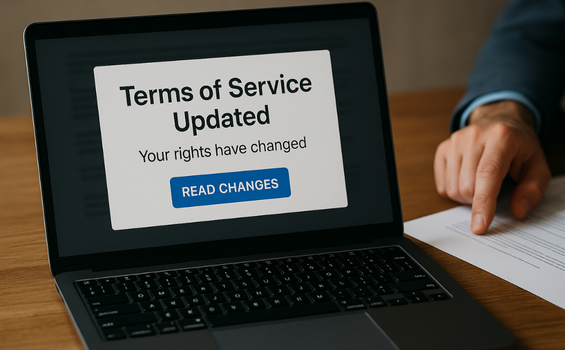
When a company changes the terms of service for products or services you already purchased, federal and state contract laws provide specific protections—though these rights vary based on contract type, notification methods, and whether the changes affect material terms of your original agreement
Understanding Terms of Service Modifications
Terms of service govern the relationship between consumers and companies providing products or services. When a company changes the terms of service after you agreed to the original contract, questions arise about whether these modifications create legally binding obligations and what recourse consumers have.
Contract law generally requires mutual agreement for modifications to become enforceable. However, many modern terms and conditions include clauses stating that companies reserve the right to modify terms at any time, sometimes with minimal notice requirements.
The enforceability of these unilateral changes depends on multiple factors, including the nature of modifications, notification adequacy, state law provisions, and whether existing contracts contain valid modification clauses. Understanding these distinctions helps consumers determine appropriate responses when facing unwanted terms of service changes.
This overview provides general information about consumer rights and does not constitute legal advice. Consumers facing specific situations should consult attorneys licensed in their jurisdictions for guidance on their particular circumstances.
Legal Framework for Contract Modifications
Traditional contract law establishes that both parties must agree to any material changes for modifications to become binding. This fundamental principle applies to consumer agreements, though digital age contracting has introduced complexities.
Modification Clause Validity
Many companies include provisions in original terms stating they may modify agreements with notice. Courts have upheld some modification clauses while invalidating others based on specific circumstances.
Valid modification clauses typically require:
- Explicit language in the original agreement stating that modification rights exist
- Reasonable notice periods before changes take effect
- Notification through agreed-upon communication channels
- Material changes that don’t fundamentally alter the original agreement’s purpose
Courts scrutinize modification clauses that allow companies to make unlimited changes without consumer consent. Some jurisdictions find these provisions unconscionable when they create one-sided obligations.
Material vs. Non-Material Changes
The distinction between material and non-material modifications affects enforceability. Material changes that significantly alter the rights, obligations, or consideration in the original contract require mutual agreement under traditional contract principles.
Material changes might include:
- Price increases beyond stated adjustment mechanisms
- Significant reductions in service levels or product features
- New mandatory arbitration clauses eliminate court access
- Changes to liability limitations or warranty terms
- Modifications affecting personal data usage rights
Non-material changes like updating company addresses, clarifying existing terms, or correcting typographical errors generally don’t require explicit consumer consent.
Notification Requirements and Adequate Disclosure
When a company changes the terms of service, the method and timing of notification affect whether modifications become enforceable. Federal and state laws establish minimum disclosure standards for certain contract types.
Email Notification Standards
Email remains the most common notification method for digital services. However, simply sending an email doesn’t guarantee adequate notice if:
- Messages go to spam folders or outdated email addresses
- Subject lines don’t clearly indicate terms of service changes
- Companies bury notifications in promotional emails
- Timing doesn’t provide reasonable review periods before implementation
Some states require more prominent notification methods for significant changes. California law, for example, mandates conspicuous disclosure of material modifications.
In-App and Website Notifications
Companies increasingly notify users through login screens, pop-up messages, or account dashboard alerts. These methods provide more direct notice than emails, but raise questions about adequate disclosure when:
- Users must click “Accept” to continue service access without alternative options
- Notification appears only once without persistent access to a comparison between old and new terms
- Changes take effect immediately without review periods
Implied Acceptance Through Continued Use
Many terms and conditions state that continued service use after notification constitutes acceptance of modified terms. Courts have reached mixed conclusions about whether this creates valid acceptance.
Factors affecting implied acceptance validity include:
- Whether consumers received actual notice of changes
- Whether reasonable alternatives exist for obtaining similar services
- Whether changes impose new costs or remove significant benefits
- Whether the original contract clearly stated this acceptance mechanism
The Consumer Protection Agency documents cases where companies claim continued use equals acceptance despite inadequate notification or material adverse changes.
Specific Rights Based on Contract Type
Different service categories involve distinct regulatory frameworks and consumer protections when companies modify terms of service.
Financial Services and Credit Cards
The Credit Card Accountability Responsibility and Disclosure (CARD) Act provides specific protections when credit card companies change terms. Issuers must provide 45 days’ advance notice for significant changes, including:
- Interest rate increases on existing balances
- Fee structure modifications
- Changes to grace periods or payment allocation methods
Consumers can reject changes by closing accounts and paying balances under the original terms. Card companies cannot accelerate payment or charge penalty fees for rejecting modifications.
Banking service agreements fall under state contract law and federal banking regulations. Account holders typically receive 30-60 days’ notice for fee changes or service modifications, with rights to close accounts without penalty.
Subscription Services and Software
Software as a Service (SaaS) and subscription platforms frequently modify terms of service. These changes might affect:
- Feature availability and service levels
- Pricing structures and billing frequencies
- Data retention and privacy practices
- Usage restrictions and sharing limitations
If a subscription service makes material changes reducing value or increasing costs, consumers may have grounds to:
- Cancel subscriptions without early termination penalties
- Receive prorated refunds for prepaid periods
- Retain access under original terms for contracted duration
Some states prohibit companies from retroactively applying adverse changes to prepaid subscription periods.
Employment and Arbitration Agreements
When companies change employment-related terms of service, including arbitration clauses or dispute resolution procedures, specific legal considerations apply. The National Labor Relations Board and state employment laws may limit the enforceability of unilateral modifications affecting worker rights.
Courts scrutinize arbitration clause additions or modifications particularly closely, with some jurisdictions requiring a separate explicit agreement beyond continued employment or service use.
Consumer Response Options
When a company changes the terms of service in ways you find unacceptable, several response options exist depending on your specific circumstances.
Rejecting Changes and Terminating Service
Most jurisdictions recognize your right to reject modifications by discontinuing service. Key considerations include:
- Whether you have prepaid for services extending beyond the change implementation date
- Whether early termination fees apply under the original contract terms
- Whether you can export your data and content before termination
- Whether the contract contains specific opt-out procedures for term changes
Document your rejection clearly through written communication, citing the specific changes you’re refusing and requesting confirmation of termination without penalties.
Negotiating Alternative Terms
Some companies offer flexibility for long-term customers or business accounts. Contact customer retention departments to:
- Request grandfathering under original terms
- Negotiate modified pricing or features as a compromise
- Obtain extended notice periods before changes take effect
Document any verbal agreements in writing through follow-up emails confirming the alternative terms discussed.
Disputing Changes Through Formal Channels
If a company changes terms of service in ways that appear to violate consumer protection laws or original contract provisions, formal dispute processes include:
Filing complaints with relevant regulatory agencies, including the Federal Trade Commission at ReportFraud.ftc.gov and state consumer protection offices. Regulatory complaints create records that may influence enforcement actions.
Initiating small claims court proceedings for contract breach if damages meet jurisdictional limits. Small claims courts typically handle disputes involving $5,000-$10,000, depending on the state.
Participating in class action lawsuits when companies make widespread adverse changes affecting many consumers similarly. Class actions may already exist for significant terms of service modifications by large companies.
Data Privacy and Terms of Service Changes
When a company changes its terms of service regarding personal data collection, usage, or sharing practices, additional privacy law protections may apply.
GDPR Protections for International Services
European Union General Data Protection Regulation (GDPR) applies to companies processing data of EU residents regardless of the company’s location. GDPR requires:
- Explicit consent for material changes to data processing purposes
- Clear notification of specific data practice changes
- The right to withdraw consent and request data deletion
Some U.S. consumers benefit from GDPR protections when using international services.
State Privacy Law Considerations
California Consumer Privacy Act (CCPA) and similar state laws restrict how companies can modify data sharing and selling practices. These laws provide:
- The right to opt out of data sales regardless of the terms of service
- Requirements for transparent disclosure of data practice changes
- Penalties for non-compliance with notification requirements
Virginia, Colorado, Connecticut, and Utah have enacted similar privacy statutes affecting terms of service modifications related to personal data.
Children’s Privacy Protections
Children’s Online Privacy Protection Act (COPPA) limits how companies can modify terms of service for services directed at children under 13. Changes affecting data collection from minors require verifiable parental consent.
Educational service providers must comply with the Family Educational Rights and Privacy Act (FERPA) restrictions when modifying terms affecting student data, limiting unilateral changes that expand data sharing.
Arbitration Clause Additions and Modifications
Companies increasingly add mandatory arbitration clauses through terms of service updates, eliminating consumers’ right to pursue court litigation. These changes raise specific legal considerations.
Opt-Out Rights
Many arbitration clause additions include opt-out provisions allowing consumers to reject mandatory arbitration within 30-60 days of notification. Exercise opt-out rights by:
- Following the exact procedures specified in the modification notice
- Sending written opt-out via certified mail when required
- Maintaining documentation proving timely opt-out
- Confirming receipt and processing of the opt-out request
Missing opt-out deadlines may eliminate your right to court litigation for future disputes.
Existing Dispute Exceptions
When companies add arbitration requirements through terms of service modifications, disputes that arose before the change typically aren’t subject to the new arbitration clause. Document any existing issues before the modification’s effective dates.
Unconscionability Challenges
Courts sometimes refuse to enforce arbitration clauses added unilaterally through terms of service changes when provisions are unconscionable due to:
- Excessive arbitration costs imposed on consumers
- Limitations on remedies available in arbitration
- Restrictions on discovery or evidence presentation
- Class action waiver provisions combined with small individual claims
Specific legal analysis of your situation requires consultation with attorneys experienced in arbitration law.
Documentation and Evidence Preservation
When a company changes the terms of service, preserving evidence supports potential disputes or regulatory complaints.
Critical Documentation
Save complete copies of:
- Original terms of service you agreed to at enrollment
- Modification notices received through any channel
- Email correspondence regarding the changes
- Screenshots of website notifications or login screens
- Records of customer service interactions about modifications
Use timestamp services or email to yourself to establish documentation dates. Services like Archive.org may capture historical versions of terms and conditions.
Tracking Implementation Timing
Document when changes take effect versus notification timing. Companies sometimes implement changes before stated effective dates or fail to provide adequate notice periods.
Record the date you first learned of changes, when companies claim notification occurred, and the stated implementation date for comparison.
Seeking Professional Guidance
Complex situations involving terms of service modifications may require specific legal guidance tailored to your circumstances and jurisdiction.
Consumer law attorneys provide consultations regarding:
- Whether modifications violate consumer protection statutes
- Whether the original contract allows specific changes
- What damages or remedies might be available
- Whether class action opportunities exist
State bar associations maintain referral services connecting consumers with attorneys practicing consumer protection law. Many attorneys offer free initial consultations.
For broader perspectives on corporate practices affecting consumers, Learn about Woke examines how policy changes impact consumer rights.
Protecting Your Interests Moving Forward
Understanding your rights when a company changes the terms of service enables effective advocacy and informed decision-making about continuing business relationships.
Review terms and conditions initially before agreeing to services, particularly modification clauses. Understand under what circumstances companies claim rights to change terms unilaterally.
Monitor email and account notifications for terms of service change announcements—set calendar reminders for opt-out deadlines when companies add arbitration clauses or make other significant modifications.
Evaluate whether service benefits justify accepting adverse modifications. Calculate actual costs of changes, including reduced features, increased prices, or limitations on your rights.
Exercise legal rights promptly when companies make modifications you find unacceptable. Delayed action may limit available remedies or create arguments that you accepted changes through continued use.
Your awareness of consumer protections when companies modify terms of service strengthens your position in commercial relationships and contributes to marketplace accountability through informed choices and appropriate use of legal remedies when businesses overreach their modification authority.

Consumer Protection Journal Team is committed to being your most trusted ally in your pursuit of consumer education.